

Whilst exploring galleries and museums, I am discovering two types; the monument to an artist or a blank exhibition space.
The gallery dedicated to an artist usually reflects the style of art, has a certain recognizable theme and compliments the artwork. In the case of Fundacio Joan Miro, the building is as creative, dynamic and obscure as his artwork. Suggestive of the Spanish vernacular, the building designed by Josep Sert is in an avant-garde architectural style, reflective of the construction era and of Miro’s artwork. With a fixed route through the spaces, the gallery presents as a mausoleum, celebrating Miro’s work and life. These types of exhibition spaces have been cultivated to specific pieces of work and would alienate any other artwork, hanging Turner’s soft landscapes in the gallery would cause dissonance. Similarly, as with The Hepworth Gallery explored elsewhere, the building and forms have been curated to reflect her sculptural style. The massive concrete expanse punctuated by windows likens to much of her late artwork.

Blank exhibition spaces are arguably harder to design. The need to accommodate most different types of artwork, by different artists, with changing light levels, acoustics, room sizes and much more. It needs to be a blank canvas in which an exhibition can be curated within. This is not to say they are boring or simple, it takes careful design to accommodate this. One example is the Turner Contemporary in Margate. A rather industrial external shell of concrete, steel and glass, the inside promotes multiple flexible gallery spaces for a range of exhibitions. These buildings could be a sculpture themselves.
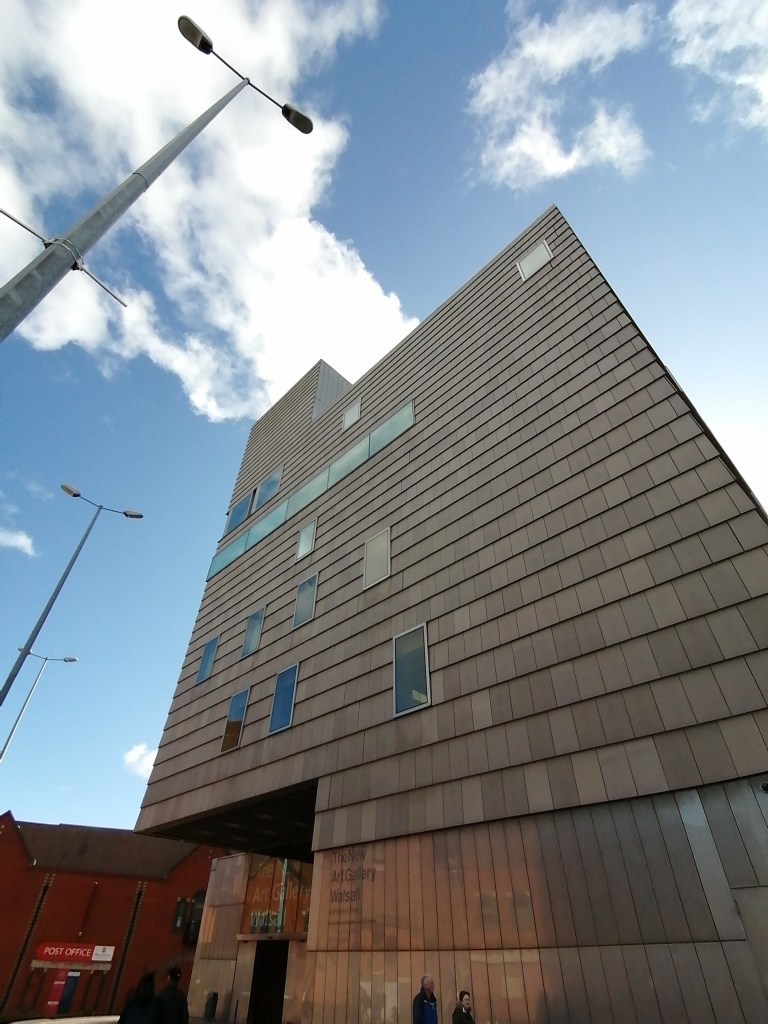
Overall these type of exhibition spaces do not exist on their own, some galleries present as a combination. The New Gallery in Walsall is the home of the Garman Ryan collection as a permanent exhibition but also features two blank canvas galleries for a range of renowned and up-and-coming artists. These appear to be much more diverse buildings, with a range of visitors and dynamic streams of income.
There are benefits of these types existing in isolation and benefits of a combined approach. This mix of cultural buildings gives any city or country a variety of interesting and educational spaces to develop the arts and create a better society for the future.
 The Damp Patch 🧱